Does standing or walking bring on pain, heaviness, or tingling in your legs? Do those symptoms improve when you sit down or lean forward? Lumbar spinal stenosis may be contributing to your discomfort.
For some people, the mild® procedure offers a minimally invasive treatment option. At Pain Consultants of East Tennessee, an evaluation can help determine whether this approach fits your symptoms and spinal anatomy.
What Is Lumbar Spinal Stenosis?
Lumbar spinal stenosis is narrowing of the spinal canal in the lower back. This narrowing can put pressure on nerves and contribute to pain, numbness, or weakness.
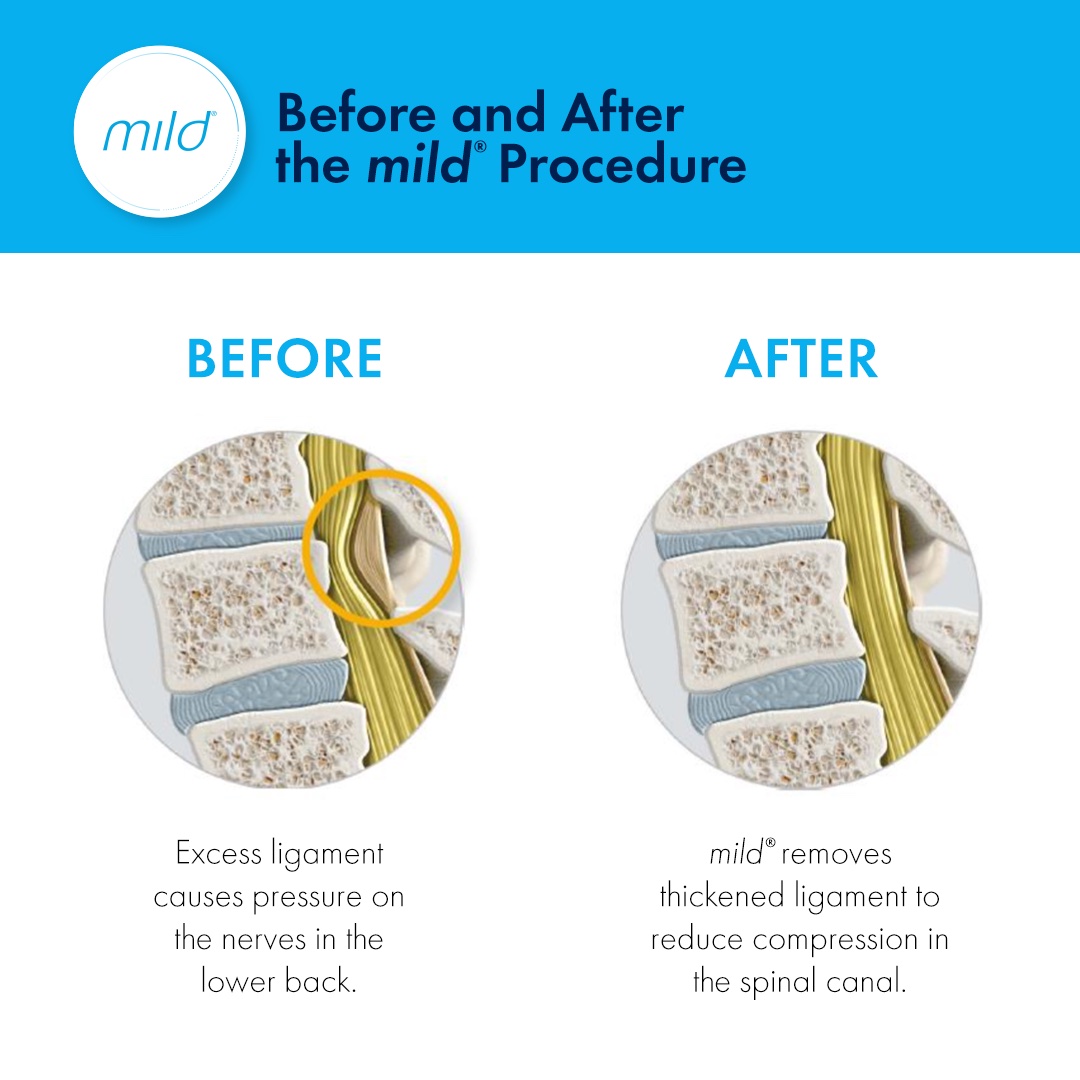
One possible contributor is thickening of a ligament called the ligamentum flavum. When this tissue takes up too much space inside the spinal canal, it can increase pressure on nearby nerves.
Symptoms that worsen with standing or walking and improve with sitting or bending forward are known as neurogenic claudication.
How Does the mild Procedure Work?
The mild procedure stands for minimally invasive lumbar decompression. You may also hear the term percutaneous image-guided lumbar decompression, or PILD.
Using live X-ray guidance and specialized instruments, your physician removes small amounts of bone and excess ligament tissue through a small incision. The goal is to create more space in the spinal canal and reduce pressure on the nerves.
The procedure does not require a permanent implant or spinal fusion.
Who May Be a Candidate?
Your specialist may consider this treatment when:
- You have lumbar spinal stenosis with symptoms of neurogenic claudication.
- Imaging shows thickened ligament tissue contributing to the narrowing.
- Previous treatments haven’t provided adequate relief.
- Your medical history and spinal anatomy support the procedure.
An MRI or other appropriate imaging helps your physician evaluate the affected area. Symptoms alone cannot establish whether mild is the right treatment.
What Are the Potential Benefits?
For appropriately selected people, the mild procedure may reduce pain and improve the ability to stand or walk.
It offers an outpatient approach through a small incision, without leaving an implant behind. Physicians typically use local anesthesia with light sedation rather than general anesthesia.
However, results vary. The procedure may not address every source of back or leg pain, and some people need additional treatment.
What Should You Expect During Recovery?
Most people return home the same day after a period of monitoring.
Your care team will explain incision care, activity guidelines, and follow-up appointments. They may also recommend a gradual walking program or rehabilitation based on your needs.
Follow your physician’s instructions for returning to work, exercise, and other activities. Recovery time and symptom improvement differ from person to person.
What Are the Risks?
Potential complications include bleeding, infection, nerve injury, and a tear in the tissue surrounding the spinal nerves that can allow spinal fluid to leak.
Symptoms may also persist or return. Your physician will discuss the benefits, risks, and alternatives before you decide.
Learn About the mild Procedure at PCET
If back or leg symptoms limit how long you can stand or walk, an evaluation can help identify the cause and clarify your options.
Watch the procedure video below or call Pain Consultants of East Tennessee at (865) 579-0552 to schedule an appointment.